
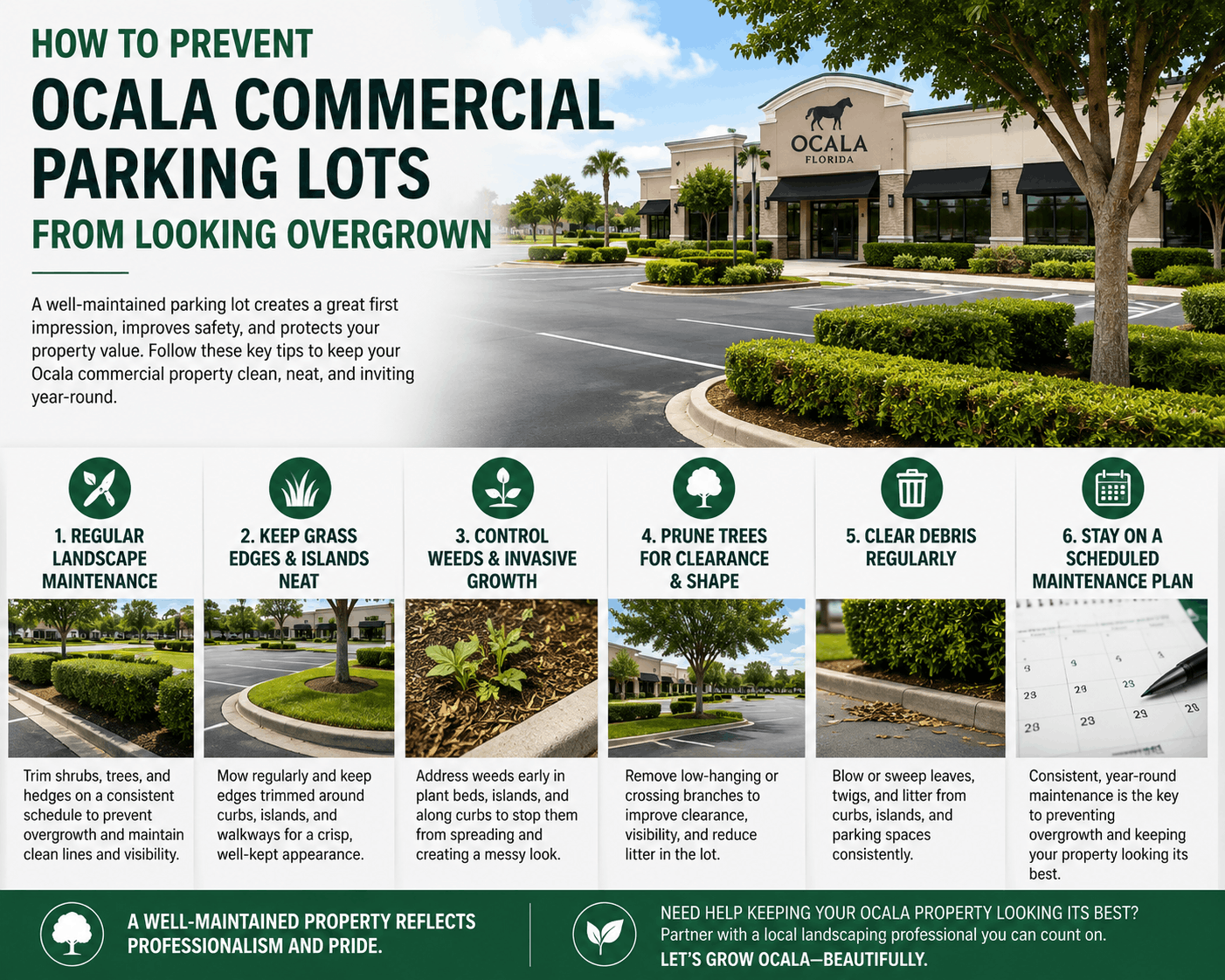
Learn how to prevent Ocala commercial parking lots from looking overgrown this July
If you are wondering how to prevent Ocala commercial parking lots from looking overgrown, the answer requires combining heavy-duty asphalt sealing with structural stormwater management. Basic retail weed killers cannot stop Central Florida’s aggressive summer root systems. True preservation protects your long-term real estate investments by targeting subbase moisture and asphalt cracking.
July in Central Florida brings a punishing, daily atmospheric loop. Blinding morning heat is quickly followed by sudden, torrential afternoon downpours. For asset managers throughout Marion County, this extreme weather cycle creates an aggressive environment for destructive plant growth.
This comprehensive guide breaks down the science of tropical pavement degradation. You will learn why professional oversight is mandatory and discover a clear defense blueprint to maintain flawless curb appeal.
📌 Key Takeaways
Seal cracks immediately: Hot-rubberized sealing cuts off the water supply that aggressive weeds need to survive.
Clear your drainage: Blocked catch basins create stagnant water, leading to rapid weed infestation along curbs.
Avoid retail chemicals: Store-bought herbicides do not reach deep asphalt root systems and risk environmental fines.
Prioritize subbase health: Vegetation growing through pavement indicates failing structural compaction beneath the surface.
Hire niche experts: Rely on commercial pavement specialists to neutralize seed banks without damaging asphalt binders.
Table of Contents
The July Rain Spike: A Subtropical Pavement Threat
Why DIY Landscaping Fails Commercial Surfaces
The Professional Preservation Strategy
Mastering Drainage to Starve Vegetative Growth
Your Preventative Maintenance Blueprint
Why Niche Property Platforms Win
Frequently Asked Questions (FAQ)
Quick Answer: The combination of Ocala’s sandy soils, summer heat, and heavy July rain forces moisture deep into pavement cracks. This creates a highly pressurized, nutrient-rich environment where invasive weeds rapidly destroy the asphalt subbase.
Ocala features a fragile mix of highly permeable sandy loam soils and underlying karst limestone formations. When combined with hyper-aggressive subtropical plant life, your pavement faces constant environmental stress.
📊 Data Point: According to historical climatological records from the National Weather Service (NWS), July is typically the wettest month for Central Florida, routinely dropping seven to nine inches of rain.
When this massive volume of water hits your commercial infrastructure, it doesn’t rest harmlessly. Gravity forces the runoff into micro-fissures, unsealed seams, and open asphalt cracks.
The Chemistry of Pavement Subgrade Erosion
Stormwater quickly breaches the porous, weather-worn top layers of an unsealed lot. It travels straight into the limerock subbase underneath. This water washes away fine binding particles in a destructive process called subgrade erosion.
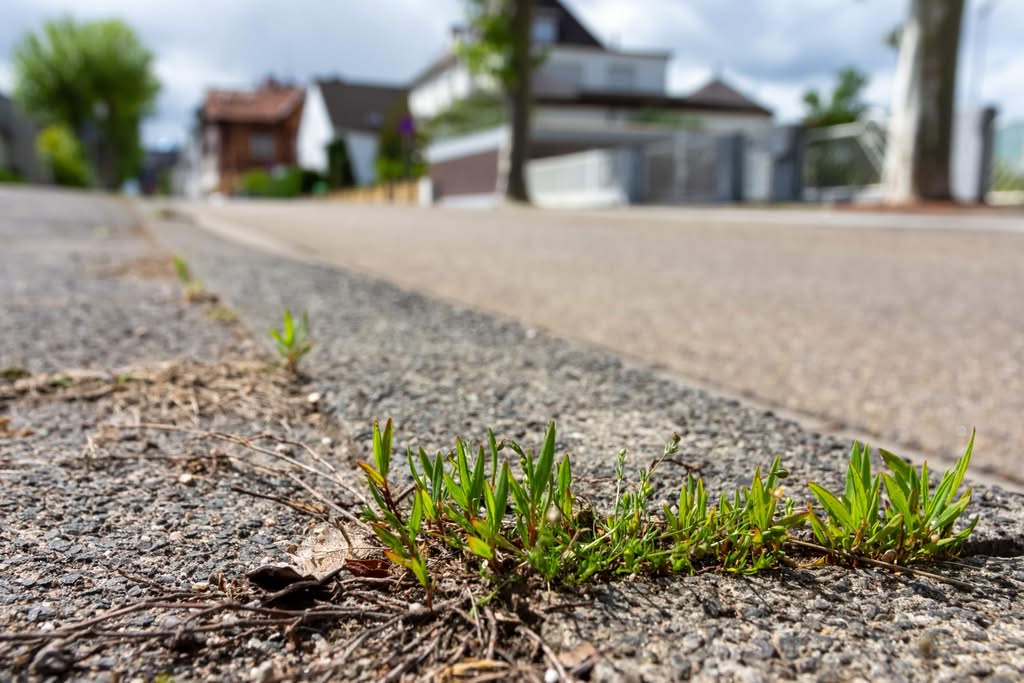
When the intense sun hits that trapped moisture, the water vaporizes. Expanding steam creates internal pressure that widens cracks. This damp space allows airborne seeds to sprout and take root easily.
The Heavy Toll on Commercial Brand Reputation
An unmaintained, wild parking structure instantly damages your business’s reputation. It signals asset neglect, lowers property values, and compromises site safety.
Thick weeds obscure traffic striping and conceal developing potholes. These conditions create dangerous trip hazards, exposing owners to liability claims and ADA non-compliance issues.
Quick Answer: DIY landscaping treats parking lots like backyard patios. Standard retail herbicides and manual wire brushes only remove surface leaves while actively destroying the pavement’s locked aggregate stone beneath.
When weeds break through parking lot seams, handing an employee a string trimmer seems cost-effective. However, applying casual landscaping tactics to a high-traffic commercial asset accelerates surface failure.
The Problem with Store-Bought Herbicides
Standard retail herbicides are designed solely to kill topical leaves. They rarely reach deep enough into dense base layers to destroy root networks snaking under the asphalt.
⚠️ Common Mistake: Overapplying unguided retail chemicals can cause toxic runoff to wash into municipal storm sewers. This violates local guidelines and can trigger steep fines from the Florida Department of Environmental Protection (FDEP).
The Damage Caused by Mechanical Tools
Using heavy manual weeding tools or high-velocity wire brushes inside pavement cracks causes serious physical harm.
Dislodging Aggregate: Forcing tools into narrow fissures breaks apart locked stone. This turns a minor crack into a wide pothole.
Compromising Subbase Compaction: Ripping out deep, woody root systems pulls up structural soil. This creates hollow pockets that cave under vehicle traffic.
To permanently stop this degradation, you must correct the physical pavement failures. This is why asset managers rely on professional parking lot maintenance strategies rather than landscaping cover-ups.
Quick Answer: Commercial pavement specialists use deep industrial sterilization and hot-rubberized crack routing. This two-step process chemically neutralizes roots and permanently seals out the water they need to survive.
Professional property preservation treats your asphalt as a dynamic, engineered system. Rather than fighting individual weeds, specialists execute an integrated routine to eliminate root zones completely.
💡 Expert Insight: “A general landscaping crew treats the symptom by cutting visible weeds. A pavement specialist treats the root cause by re-engineering the surface boundary to make weed growth structurally impossible.” – The Lot Patrols Team
Deep Industrial Sterilization
Before applying sealants, providers inject commercial-grade growth regulators into pavement gaps. These compounds alter the subbase soil chemistry. They neutralize deep seed banks without damaging surrounding asphalt binders.
High-Velocity Crack Routing and Hot-Rubberized Sealing
Once roots are neutralized, technicians use mechanical crack routers to clean the open channels. This clears out packed dirt and plant debris, exposing a clean surface for bonding.
Next, technicians inject a polymer-modified rubber sealant at temperatures above 350°F. As it cools, this compound creates an elastic, waterproof seal. It stretches during temperature shifts, permanently cutting off water access.
Quick Answer: Subtropical weeds require stagnant water and collected silt to grow. Keeping catch basins, drainage swales, and curb valleys completely clear of debris removes the water supply that fuels overgrowth.
On many Ocala commercial properties, thick overgrowth is a direct symptom of blocked storm drainage systems. If water cannot escape, weeds will thrive.
Clearing Catch Basins and Inlets
Severe July storms wash grass clippings, soil, and leaves straight into catch basins. Blocked inlets cause water to back up across driving lanes, creating standing pools along curbs.
✅ Quick Tip: Inspect your concrete curb lines 24 hours after a heavy rainstorm. If mud and water are still pooled at the edges, your drainage inlets require immediate professional flushing.
These damp edges create a prime habitat for fast-growing vegetation. Professional schedules ensure catch basins are fully cleaned and ready to move heavy stormwater.
| Degradation Level | Visible Signs | What’s Happening Underneath | Professional Solution Required |
| Phase 1: Hairline Splits | Small green sprouts in joints | Water is slipping past the old top seal | Industrial Crack Routing & Sealing |
| Phase 2: Base Softening | Alligator cracks; standing weeds | Subbase is losing physical compaction | Deep Injection & Full-Depth Patching |
| Phase 3: Structural Ruin | Deep potholes; shifting soils | Complete collapse under traffic loads | Full Excavation & Re-compaction |
Managing Drainage Swales and Retention Basins
Most commercial real estate sites feature engineered retention areas to store runoff. When ignored, invasive brush reduces the system’s ability to pull water away. Keeping these perimeters clear requires specialized industrial clearing equipment.
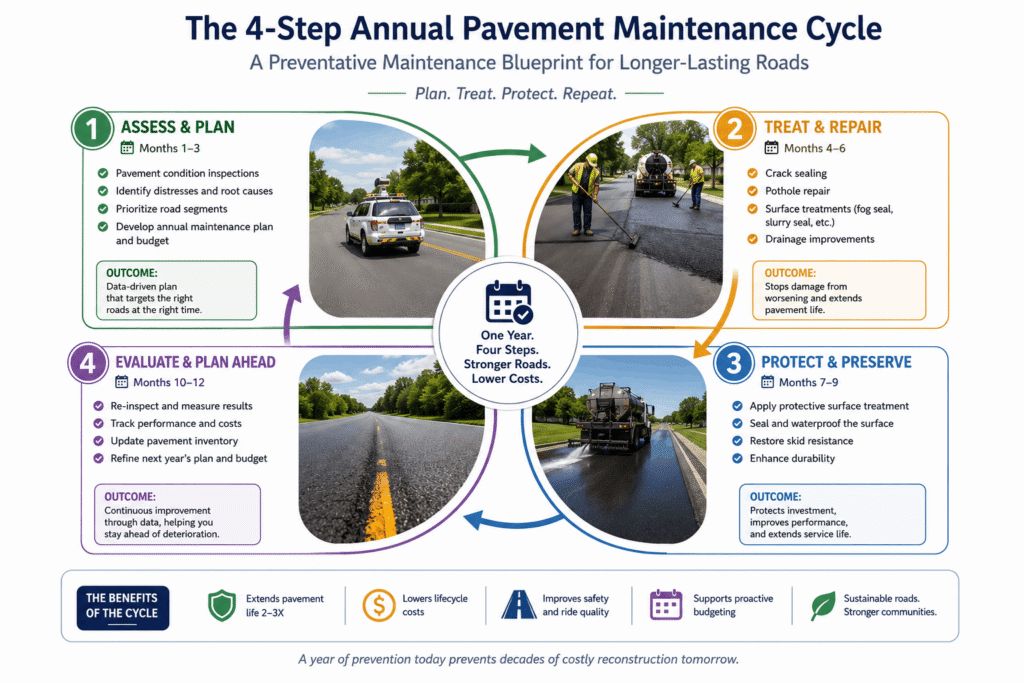
Quick Answer: A strong preventative routine includes spring inspections, May drainage flushes, June crack sealing, and bi-annual full surface sealcoating. This proactively locks out moisture before the heavy rains arrive.
Proactive maintenance is significantly cheaper than major pavement reconstruction. A consistent routine tailored to Florida’s weather shifts keeps your asphalt resilient.
Perform a Detailed Spring Inspection (March/April): Walk your entire property before summer arrives. Map out emerging fissures, standing water, and faded paint.
Flush Commercial Drainage Systems (May): Clear debris from catch basins and curb valleys. Free-flowing systems prevent pavement pooling.
Apply Joint and Crack Sealing (June): Route and seal active cracks using industrial hot-pour rubber. This cuts off water supplies before July.
Apply a Dual-Coat Sealcoating (Every 2–3 Years): Apply a premium asphalt emulsion coat. This locks out UV rays and forms a tough shield against rainfall.
The Protective Power of Professional Sealcoating
A professional sealcoat acts as a protective shield. The intense Florida sun bakes natural oils out of pavement, causing it to become brittle. A high-grade sealcoat locks out water and stops seasonal weeds from establishing a foothold.
Quick Answer: Dedicated commercial pavement experts possess the specific industrial sealants, routing equipment, and local climate knowledge required to stop structural degradation, rather than just trimming the surface.
Keeping a commercial parking area safe requires specialized equipment. Relying on internal handymen usually leads to temporary fixes and wasted budgets.
When you team up with dedicated experts for commercial property solutions, you receive targeted strategies. Our team flushes failing storm drains and applies heavy-duty sealants engineered for Florida’s toughest weather.
Frequently Asked Questions
What is the best way to stop weeds from growing through asphalt?
The best way to stop weeds is by using deep industrial sterilization combined with hot-rubberized crack routing. This method chemically neutralizes the underlying root system and permanently seals the fissure, starving future seeds of the water they need to grow.
How does heavy rain damage commercial parking lots?
Heavy rain infiltrates unsealed asphalt fissures and washes away the limerock subbase beneath the surface. When the sun vaporizes this trapped moisture, the expanding steam physically widens the cracks, leading to potholes and structural failure.
Can I use store-bought weed killer on my commercial parking lot?
No. Store-bought weed killers only target surface foliage and fail to reach deep structural root systems. Additionally, retail chemicals can easily wash into local storm drains, potentially causing you to incur severe environmental compliance fines.
How often should a commercial parking lot be sealcoated in Florida?
In Florida’s harsh subtropical climate, commercial parking lots should receive a dual-coat asphalt sealcoating every two to three years. This frequency protects the pavement from intense UV oxidation and aggressive summer moisture penetration.
How do I prevent Ocala commercial parking lots from looking overgrown?
To prevent Ocala commercial parking lots from looking overgrown, you must implement a proactive maintenance plan. This includes clearing your catch basins in May, applying hot-pour crack sealants in June, and maintaining proper stormwater drainage away from your driving lanes.
Secure Your Asset’s Curb Appeal Today
Protecting your commercial real estate requires looking beyond simple landscaping. By managing your stormwater drainage, utilizing hot-rubber crack sealing, and maintaining a strict preventative schedule, you permanently stop aggressive root growth. You protect your pavement’s subbase and eliminate the costly liabilities of an unkempt property.
Take action before the heavy summer rains destroy your asphalt integrity:
Walk your property to identify pooling water and open cracks.
Clear all storm drains and catch basins immediately.
Partner with an asphalt specialist for structural crack routing and sealing.
Don’t let intense storms damage your property’s safety. Contact the expert team at Lot Patrols today to schedule your comprehensive site evaluation and secure your Ocala asphalt repair services.